

Waymire Farms Tractor Services
Gravel Driveway & Lane Grading
Most wrecked gravel driveways don't need new stone — they just need the right equipment and someone who knows how to use it. We bring both.
The problem with most gravel driveways
Indiana winters are hard on gravel driveways. Freeze-thaw cycles heave the surface, spring rains wash gravel to the edges, and traffic grinds ruts deeper with every pass. After a few seasons of neglect, what started as a functional gravel lane can look like a two-track through a hay field — grass growing in the middle, loose stone piled along the edges, standing water after every rain.
Most people assume that means a truckload or two of new gravel. Often it doesn't. The gravel is usually still there — it's just in the wrong place. Using a box blade to resurface the driveway before spreading stone can cut the amount of stone needed significantly, or eliminate it altogether.
"The gravel was already there. It just needed the right equipment to bring it back."
Before & After
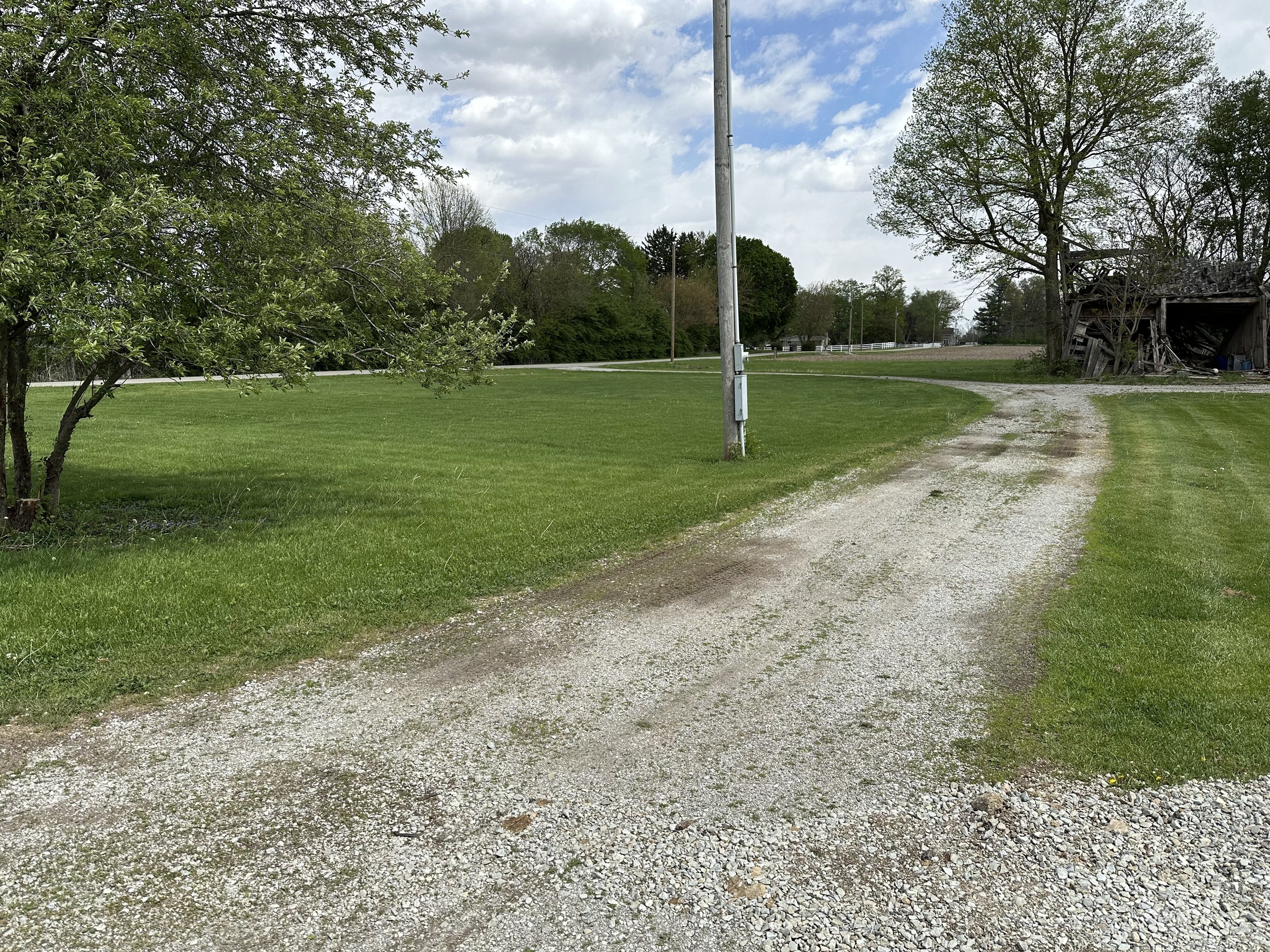
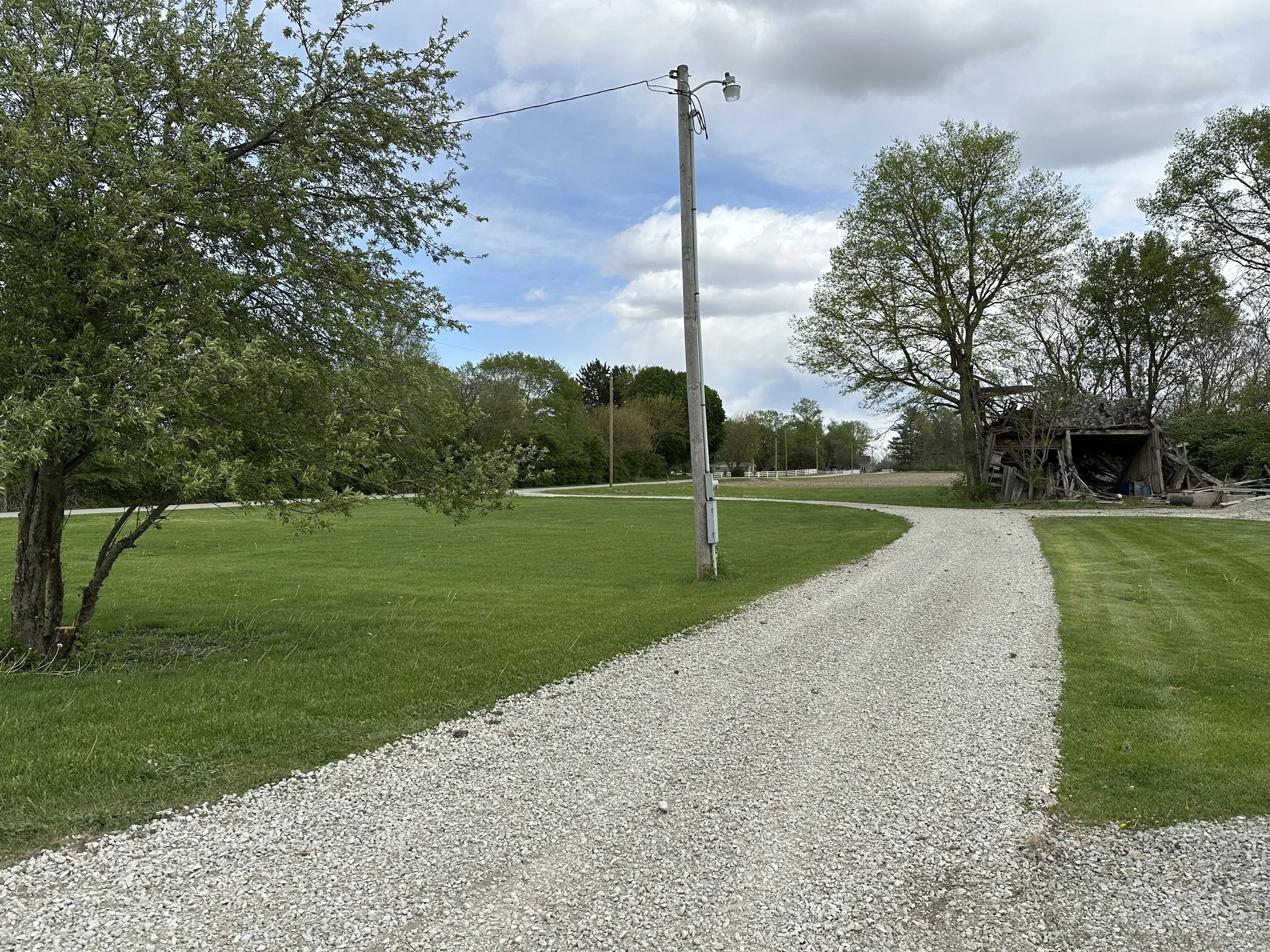
This driveway is approximately 670 feet — a double circle drive. To resurface it with fresh #53 limestone at a 2-inch spread would have required around 60 cubic yards of stone — roughly 5–6 triaxle loads and right around $3,500 in material and delivery. Instead, we spent a few hours working it with the box blade, redistributed what was already there, and topped it off with about half a triaxle load of fresh gravel.
How the process works
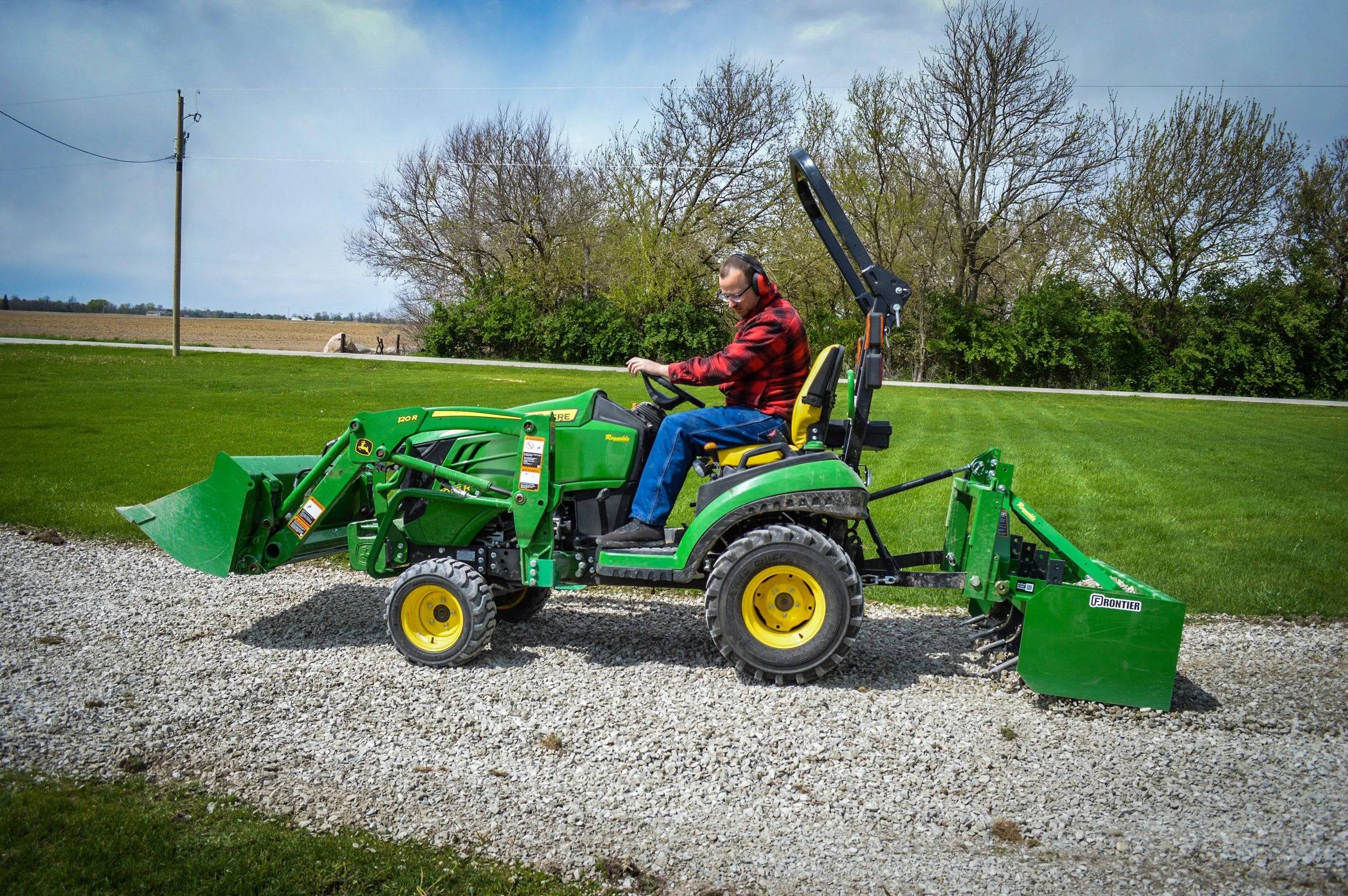
We use a John Deere 1025R with a box blade and rear-mounted rippers. Here's what happens on a typical grading job:
Why Waymire Farms
We work our own land first
Every technique we use on your property we've used on our own farm. We're not guessing — we're applying what works.
Right-sized equipment
A full excavation contractor may be overkill for a residential lane. Our subcompact setup is precise, lighter on the ground, and priced accordingly.
Honest scope
We'll tell you upfront if a job needs new gravel, drainage work, or something beyond what we can do. No surprises.
Pride in every pass
We do this because we genuinely enjoy it — the equipment, the land, the satisfaction of a clean finished job. Customers notice the difference.
Is this the right service for your driveway?
Driveway grading works best when the existing gravel base is still intact but has migrated to the edges, the surface is rutted or uneven from traffic or freeze-thaw, grass or weeds have taken hold in the lane center, or drainage is poor due to a lost crown. If your lane needs significant new gravel, culvert work, or major regrading from scratch, we'll let you know and point you in the right direction.
Ready to get a quote?
Tell us about your property and we'll get back to you promptly. No obligation.
Get in touch